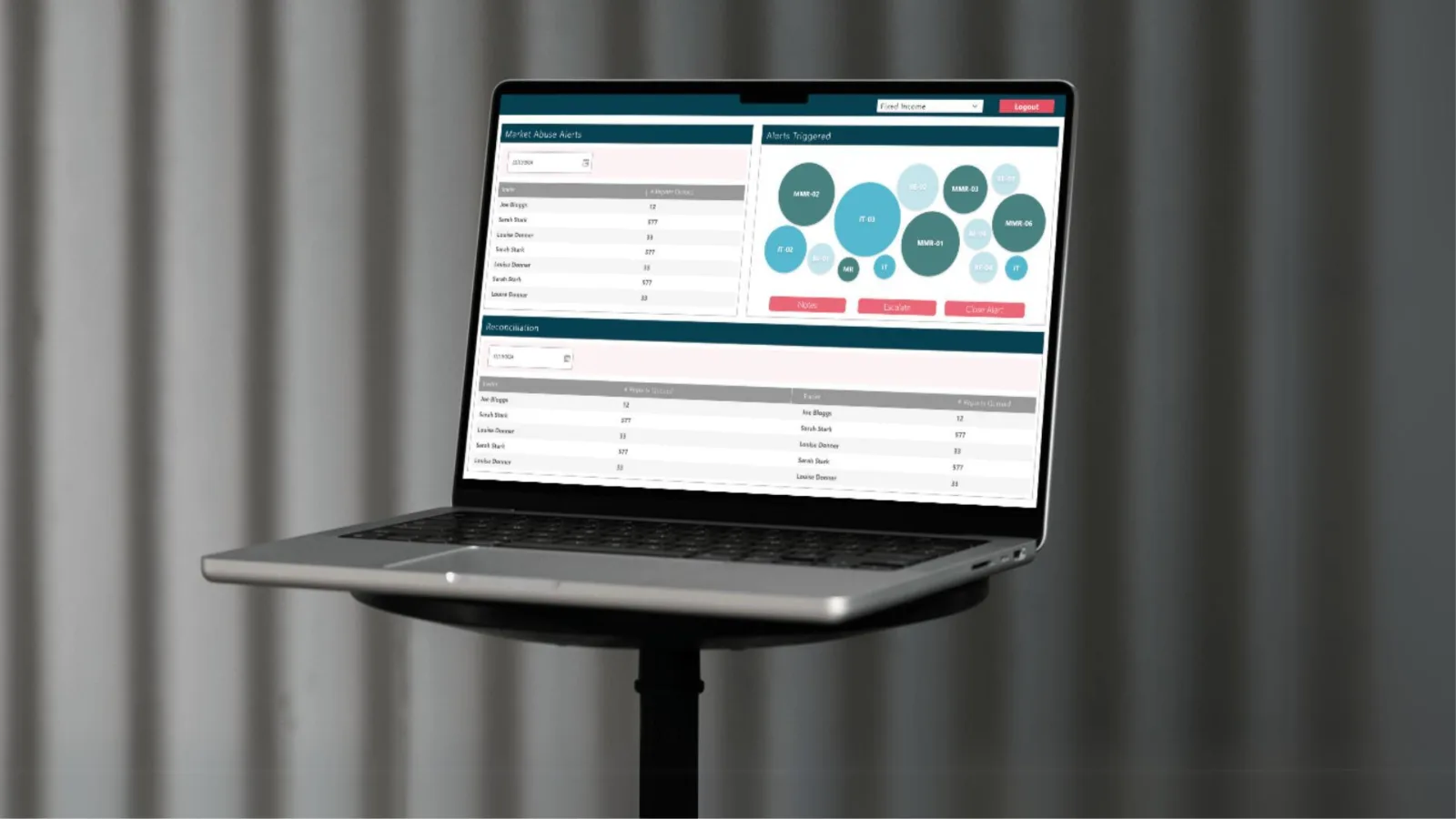
Managing false positives effectively is a crucial element to any trade surveillance system. When incorrectly configured, these alerts can not only overwhelm compliance teams, but also increase the risk that truly manipulative behaviours go unnoticed.
Trade surveillance is a crucial component of regulatory compliance for financial firms. Effective surveillance systems help detect market abuse, insider trading, and other manipulative trading behaviours. However, one of the biggest challenges compliance teams face is dealing with false positives – alerts that are generated by the surveillance system which, upon investigation, turn out not to be indicative of any actual wrongdoing.
In this article, we explore the impact of false positives, why they happen, and how advanced technology can help firms reduce their false positive rates while maintaining robust surveillance capabilities.
The impact of false positives in trade surveillance
When a surveillance system generates a high volume of false positives it can overwhelm an already busy compliance team. Analysts spend valuable time investigating these alerts, often at the expense of genuine threats. A high false positive rate can lead to:
- Alert fatigue: When analysts become desensitised to the volume of alerts, potentially missing genuine instances of market abuse.
- Increased operational costs: Resources are diverted to investigating non-threatening alerts, increasing a firm’s compliance spend without any meaningful return on investment.
- Delayed detection of actual threats: The time and effort spent on false positives can delay the identification of real market abuse, exposing the firm to unnecessary regulatory and financial risk.
Common causes of false positives
False positives in trade surveillance can be triggered by a variety of factors. Some of the most common causes include:
- Lack of contextual data: Surveillance systems that rely solely on trade data may flag normal market activity as suspicious because they lack context such as order book data, market conditions, or eComms data that could explain the behaviour behind a trade or series of trades.
- Static detection models: Legacy surveillance systems that use static and inflexible models can fail to adapt to changing market dynamics. For example, increased volatility during earnings season might trigger a large number of alerts that don’t reflect actual misconduct.
- Insufficient market data integration: Without access to comprehensive market data from multiple exchanges and trading venues, surveillance systems may not have the full picture of market activity. This can lead to false alerts when trades appear unusual in isolation but are entirely normal in a broader context.
How eflow addresses false positives with TZ
At eflow, we have engineered our trade surveillance platform (TZ) to significantly reduce false positives while maintaining the highest levels of detection accuracy. Here’s how:
- Comprehensive data integration: Our surveillance system correlates trade data with a wide range of additional data sources, including order book data, market data from over 250 venues, and eComms data. This integration provides a much richer context for each alert, reducing the likelihood of false positives.
- Dynamic detection models: Our models are designed to adapt to changing market conditions, adjusting detection criteria based on factors like market volatility, trading volume, and asset class-specific patterns.
- Rich order book replay: TZ includes a rich order book replay feature which allows compliance teams to visually reconstruct the state of the order book at any given point in time. This helps analysts quickly determine whether an alert was triggered by normal market activity or potentially abusive behaviour, reducing the time spent investigating false positives.
- Multi-dimensional alert scoring: Our system assigns scores to alerts based on multiple factors, including the severity and frequency of the behaviour and the number of relevant data points. This helps compliance teams prioritise their investigations and focus on the most significant threats.
At eflow, we recognise that reducing false positives is not just about improving efficiency – it’s about enabling compliance teams to focus on what really matters: protecting the integrity of the markets and the firms they serve.
If you’d like to learn more about how TZ can help your firm reduce false positives while strengthening your compliance operations, book a consultation with one of our experts today.