Regulatory news
2025 market abuse and trade surveillance roundup: Broker-dealers

Ben Parker
•
Chief Executive Officer & Founder
April 2, 2026

A deep dive of the key trade surveillance and market abuse trends impacting broker dealers
Broker-dealers are the primary gateway to financial markets, acting as the first line of defence against market abuse. As they hold direct responsibility for monitoring client activity, they can detect, halt, and report suspicious trades.
Regulatory expectations are high, and scrutiny is constant. Any failure to effectively police markets is met with swift enforcement action. Our latest global report – Global Trends in Market Abuse and Trade Surveillance 2026 – showed broker-dealers were the subject of $124 million in fines across 25 enforcement cases in 2025, the highest of any financial services subsector.
This blog examines where broker-dealers are falling short, how their surveillance capabilities are evolving, and how changing market dynamics impact the risk landscape going forward.
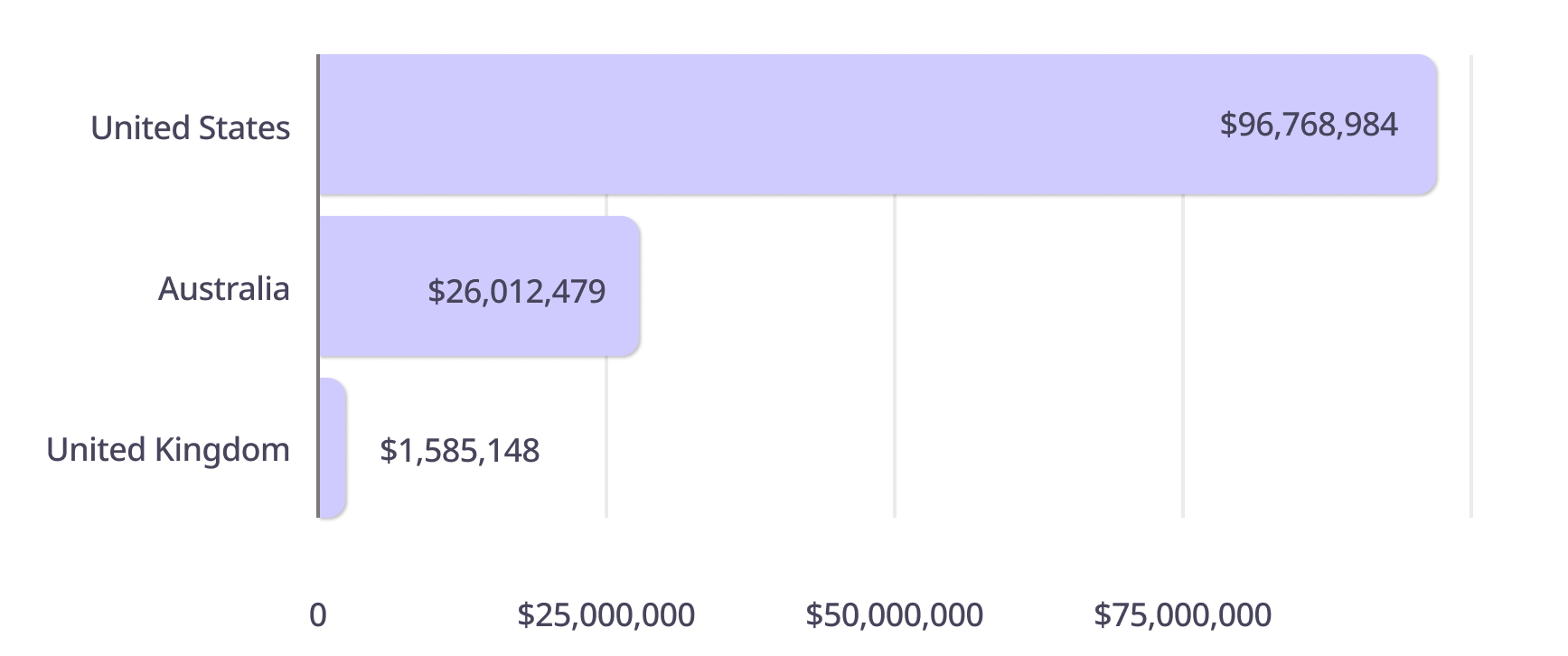
The majority of broker-dealer enforcement in 2025 was driven by deficiencies in trade surveillance systems and controls, accounting for over $74 million in penalties. This represented the largest single contributor by firm type across all typologies by a significant margin.

Regulators rely on broker-dealers to act as effective gatekeepers, not passive intermediaries. When surveillance frameworks fall short, it undermines the broader integrity of market oversight.
Beyond the top-level categorisation, the enforcement actions themselves highlight where surveillance frameworks are breaking down. The patterns are consistent, and, in many cases, persistent.
In several cases, firms generated such high volumes of alerts that meaningful review became impossible.
Beyond alerting issues, a second cluster of weaknesses relates to supervisory frameworks, where controls formally exist but are not effectively governed or enforced.
Some cases highlight breakdowns in the broker-dealer’s role as a market gatekeeper, where suspicious behaviour was entirely missed.
Perhaps unsurprisingly, broker-dealers themselves are signalling strain. 52% of respondents cited deregulation and simplification as a priority, while 48% called for greater transparency in enforcement. At the same time, keeping pace with regulatory change is their single biggest challenge.
This points to a segment under sustained pressure, not only from enforcement risk, but from the growing complexity of translating regulatory expectations into effective, scalable surveillance.
Broker-dealers are actively investing in technology, particularly artificial intelligence (AI), to improve surveillance outcomes.
The picture that emerges is one of transition. Broker-dealers report the highest rate of full AI deployment among all industry segments (21%), with the largest cohort close behind in the rollout and pilot phase. A further significant proportion is actively planning deployment within the next 12–24 months.
However, this progress is not universal. A meaningful minority (24%) remains constrained by capability, lacking either the strategy or in-house expertise required to progress. While this is one of the lowest proportions reporting no current usage among surveyed segments, it remains significant. Understanding the technology, identifying high-impact use cases, and executing effectively, whether through internal development or vendor selection, are significant barriers to adoption.
AI is delivering value for brokers in two key areas: enhancing market abuse detection, and supporting the surrounding workflows (such as investigations, data summarisation, and reporting) through co-pilot capabilities. Both map directly to the areas of weakness highlighted earlier in the enforcement analysis.
This alignment between regulatory expectations and industry response is encouraging, and the impact of these efforts is likely to become increasingly visible over the coming year.
Evaluating enforcement is inherently backward-looking. The next wave of market abuse risk is already taking shape, driven by broker-dealers expanding into crypto assets and prediction markets in pursuit of significant new revenue opportunities.
In crypto markets, supervision is beginning to resemble traditional market abuse oversight, but with a broader and more complex surveillance perimeter. Regulators are signalling that market integrity cannot be assessed through trade data alone. Expectations now extend across on-chain analytics, off-chain activity, social media signals, and even settlement infrastructure. For broker-dealers, this represents a shift from venue-centric monitoring toward ecosystem-level surveillance.
Prediction markets introduce a different, but equally challenging, dynamic. As these products enter mainstream distribution, firms must detect manipulation driven by information asymmetry, narrative influence, and real-world event timing, often outside traditional market data and control frameworks.
Together, these asset classes place increasing strain on existing surveillance models. Systems built around price patterns and order-book behaviour will need to evolve toward more integrated, intelligence-led approaches, combining behavioural analytics, alternative data sources, and cross-market visibility.